The Pain Management Revolution: What the Data Says About Biofeedback and America's Shift Away from Opioids
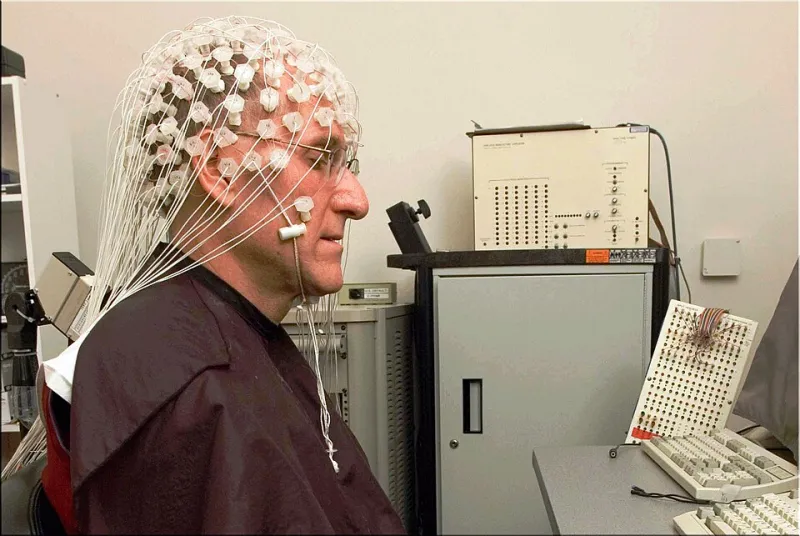
Photo: Bryan D Carter, CC BY 2.0, via Wikimedia Commons
Something significant is happening in the waiting rooms of pain management clinics across the United States. Patients who once accepted a prescription as the inevitable conclusion of every appointment are arriving with new questions — and, in many cases, with a willingness to pursue answers that do not come in a bottle.
The numbers tell a striking story. According to survey data compiled by the National Center for Complementary and Integrative Health, approximately 38 percent of American adults use some form of complementary or alternative medicine annually, with that figure climbing steadily among individuals managing chronic pain conditions. Independent polling conducted in recent years suggests that nearly half of those living with persistent pain have either tried or are actively considering non-opioid alternatives — a statistic that reflects both growing awareness of addiction risks and a broader cultural reckoning with the limitations of pharmaceutical pain management.
Biofeedback therapy sits at the center of this shift. Once dismissed by portions of the medical establishment as insufficiently rigorous, it has accumulated a body of clinical evidence that is increasingly difficult to ignore.
The Opioid Shadow: Why Patients Are Demanding Different Options
To understand the current appetite for alternatives, it is necessary to acknowledge the context from which it emerged. The opioid crisis — which claimed more than 80,000 American lives in 2021 alone, according to the Centers for Disease Control and Prevention — did not arise from nowhere. It was, in substantial part, the consequence of a medical culture that defaulted to powerful analgesics as the most efficient response to chronic pain.
The fallout has been profound. Physicians face heightened scrutiny when prescribing opioids. Patients carry the stigma of dependence risk. And perhaps most importantly, millions of Americans living with legitimate, debilitating pain have found themselves caught between undertreated suffering and the genuine dangers of long-term opioid use.
"What we are witnessing is not anti-medicine sentiment," observes Dr. Carla Meyerson, a pain psychologist whose work has been cited in several integrative health publications. "It is patients becoming sophisticated consumers of their own healthcare. They want solutions that address the underlying mechanisms of their pain, not just the sensation of it."
Biofeedback therapy, proponents argue, does precisely that.
What the Research Actually Demonstrates
The clinical literature on biofeedback and chronic pain has grown substantially over the past two decades. A meta-analysis published in Applied Psychophysiology and Biofeedback — the field's primary peer-reviewed journal — reviewed 55 controlled studies and found that biofeedback interventions produced statistically significant reductions in pain intensity across multiple chronic conditions, with effect sizes comparable to, and in some cases exceeding, those associated with commonly prescribed non-opioid medications.
For migraine sufferers, the evidence is particularly robust. A 2019 Cochrane Review — widely regarded as among the most rigorous forms of systematic research synthesis — concluded that biofeedback was more effective than relaxation therapy alone and produced outcomes comparable to pharmacological prophylaxis for episodic migraine. Importantly, it did so without the side effects — including fatigue, dizziness, and weight gain — that frequently accompany preventive migraine medications.
For individuals living with fibromyalgia, a condition characterized by widespread musculoskeletal pain and profound fatigue, biofeedback has demonstrated particular promise in addressing the central sensitization that underlies the disorder. Research from the University of Washington found that patients who completed a structured biofeedback program reported significant reductions in pain catastrophizing — the tendency to anticipate and amplify pain — alongside measurable improvements in functional capacity.
Lower back pain, the single most common cause of disability in the United States, has also been the subject of substantial biofeedback research. Surface electromyographic (sEMG) biofeedback, which monitors muscle tension in real time, has been shown to help patients identify and correct the patterns of muscular bracing and asymmetry that perpetuate chronic lumbar pain. A randomized controlled trial published in Pain Medicine found that sEMG biofeedback combined with physical therapy produced greater and more durable pain reduction than physical therapy alone.
Patient Voices: Living Beyond the Prescription
Behind every data point is a person who has navigated the frustrating, often isolating experience of chronic pain. At Pulsed Biofeedback Clinic, we have had the privilege of accompanying many such individuals through their treatment journeys.
Rachel, a 52-year-old elementary school teacher from the Pacific Northwest, had managed migraines with a rotating combination of triptans and preventive medications for eleven years before seeking biofeedback. "I was spending three to four days a month in a darkened room," she recalls. "The medications helped, but they also made me feel like I was operating at 60 percent the rest of the time." After completing a ten-session thermal biofeedback protocol — which teaches patients to voluntarily increase peripheral blood flow, thereby reducing the vascular changes associated with migraine onset — Rachel reported a 60 percent reduction in migraine frequency over the following six months.
For James, a 47-year-old construction contractor with a decade-long history of lower back pain, the appeal of biofeedback was straightforwardly practical. "I couldn't keep taking time off work because of flare-ups, and I wasn't willing to go down the opioid road after watching what happened to my brother," he says. Through sEMG biofeedback, James learned to identify the habitual muscular tension patterns he had developed — unconsciously — as a protective response to past injury. "The moment I could actually see my muscle activity on a screen, it stopped being abstract. I could do something about it."
How to Evaluate Biofeedback as Part of Your Pain Management Plan
For readers considering biofeedback as a complementary or primary approach to chronic pain, several practical considerations are worth bearing in mind.
Seek qualified practitioners. The Biofeedback Certification International Alliance (BCIA) maintains a directory of board-certified biofeedback practitioners in the United States. Certification ensures that your provider has met established competency standards and adheres to ethical guidelines.
Understand that biofeedback is a skill, not a passive treatment. Unlike receiving a prescription, biofeedback requires active engagement and consistent practice. Patients who approach it with commitment and realistic expectations tend to achieve the most meaningful outcomes.
Consider it as a complement, not necessarily a replacement. For many patients, biofeedback works most effectively as part of an integrated pain management strategy that may include physical therapy, dietary modifications, and — where appropriate — judicious use of medication. The goal is not ideological purity; it is effective, sustainable relief.
Verify insurance coverage. An increasing number of insurance plans, including some Medicare Advantage policies, now provide partial or full coverage for biofeedback therapy when prescribed for specific conditions. It is worth contacting your insurer before beginning treatment.
A Different Conversation About Pain
The conversation around chronic pain management in America is changing — slowly, sometimes unevenly, but with unmistakable momentum. Patients are no longer content to accept that living with persistent pain means choosing between inadequate relief and the risks of long-term pharmaceutical dependence. They are seeking approaches that respect the complexity of their experience and engage their capacity for self-regulation.
Biofeedback therapy does not promise to eliminate pain from every patient's life. What it offers is something arguably more valuable: a means of understanding and influencing the physiological processes that sustain it. In a healthcare landscape still recovering from the consequences of over-reliance on opioids, that is a meaningful proposition.
At Pulsed Biofeedback Clinic, we are committed to providing evidence-based biofeedback services to patients across the full spectrum of chronic pain conditions. If you are ready to explore what a personalized biofeedback program might offer your specific situation, we encourage you to reach out for a comprehensive initial consultation.
The information provided in this article is for educational purposes and does not constitute medical advice. Patients should consult with a qualified healthcare provider before making changes to their current pain management plan.