Rewiring Your Nervous System: How Biofeedback Therapy Teaches Your Body to Find Its Own Calm
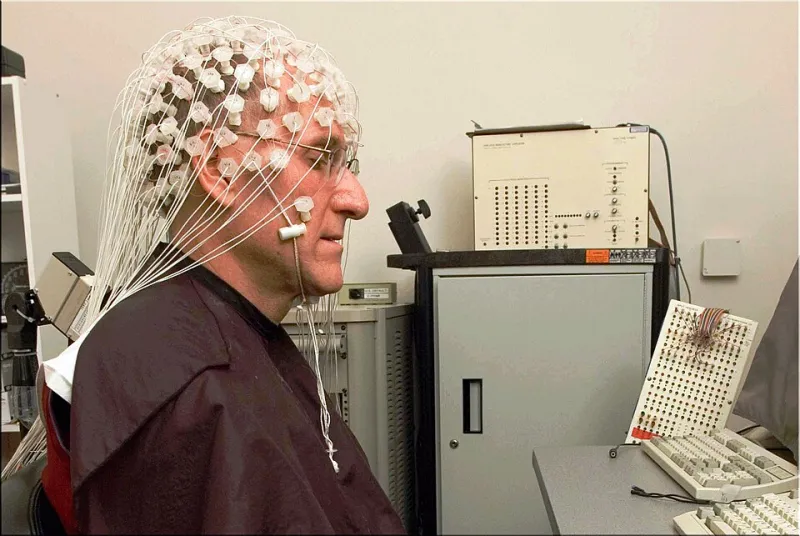
Photo: Antoine Lutz, Public domain, via Wikimedia Commons
For decades, the standard response to chronic stress and anxiety in the United States has followed a predictable path: a physician's visit, a prescription, and a daily pill. Yet a growing number of Americans are asking a different question — not what can I take to feel calmer, but what can I learn to do it myself? At the heart of this shift lies one of the body's most remarkable biological highways: the vagus nerve.
At Pulsed Biofeedback Clinic, we work with patients who have often exhausted conventional options before discovering the profound potential of biofeedback therapy. What we consistently observe in our practice aligns with an expanding body of scientific research: when individuals learn to tune into their own physiological signals, they gain genuine, measurable control over their stress response.
Understanding the Vagus Nerve: Your Body's Internal Reset Button
The vagus nerve — derived from the Latin word for wandering — is the longest cranial nerve in the human body. It travels from the brainstem through the neck, chest, and abdomen, interfacing with the heart, lungs, and digestive tract along the way. Its primary function is to carry signals between the brain and the body's organs, and it serves as the main conduit of the parasympathetic nervous system — the biological counterpart to the fight-or-flight response.
When the vagus nerve is functioning optimally, it acts as a natural brake on stress. It slows the heart rate, lowers blood pressure, reduces inflammation, and signals the brain that the environment is safe. Scientists refer to the measure of this nerve's activity as vagal tone, and research published in journals including Psychological Science and Frontiers in Psychology has consistently linked higher vagal tone to better emotional regulation, reduced anxiety, and improved cardiovascular health.
The challenge, however, is that modern life — with its relentless demands, poor sleep, and chronic low-grade stress — tends to suppress vagal tone over time. The result is a nervous system that remains perpetually primed for threat, even when no genuine danger is present.
Heart Rate Variability: The Window Into Your Autonomic Balance
One of the most reliable ways to assess vagal tone is through heart rate variability, commonly abbreviated as HRV. Unlike heart rate, which simply measures how many times the heart beats per minute, HRV captures the variation in time between consecutive heartbeats. A healthy heart does not beat with metronomic regularity; it accelerates slightly on inhalation and slows on exhalation, a phenomenon known as respiratory sinus arrhythmia. Greater variability in this rhythm generally reflects stronger parasympathetic influence — and therefore, healthier vagal tone.
Biofeedback therapy uses real-time HRV monitoring as a cornerstone tool. Sensors attached to the fingertip or earlobe feed data to a display that patients can observe while practicing specific breathing techniques, mental focus exercises, or relaxation strategies. The immediate visual feedback creates a learning loop that is remarkably effective: patients can see, in real time, how a slow exhalation or a shift in mental attitude changes their physiological state.
A landmark study conducted by researchers at the HeartMath Institute found that participants who practiced HRV biofeedback for as few as six weeks demonstrated significant reductions in perceived stress, improved emotional regulation, and measurable increases in vagal tone. These findings have since been replicated in clinical populations ranging from post-traumatic stress disorder patients to individuals managing generalized anxiety disorder.
From the Treatment Room: Two Patient Journeys
Consider the experience of a 41-year-old marketing executive — we will call her Diane — who arrived at our clinic following two years of escalating anxiety and sleep disruption. Diane had tried two different antidepressants, both of which produced side effects she found intolerable. Her initial HRV assessment revealed markedly low vagal tone and a nervous system that was spending the vast majority of its time in a sympathetically dominant state.
Over the course of eight biofeedback sessions, Diane learned to identify the early physiological signals of a stress response — a subtle tightening in the chest, a slight increase in breathing rate — and to counteract them using coherent breathing, a technique involving slow, rhythmic respiration at approximately five to six breaths per minute. By her final session, her resting HRV scores had improved by 34 percent, and she reported sleeping through the night for the first time in over a year.
A second patient, a 58-year-old retired teacher named Marcus, came to us with a different presentation: a history of hypertension and a physician's recommendation to explore non-pharmacological stress management strategies. Marcus was initially skeptical of the process, having spent his career in a data-oriented field. Yet it was precisely the measurable, visual nature of biofeedback that ultimately engaged him. Watching his HRV trace shift in response to his breathing gave him what he described as a sense of agency he had never experienced through conventional relaxation advice. Six months after completing his initial biofeedback program, his cardiologist noted a meaningful reduction in his resting blood pressure.
Practical Techniques You Can Begin Today
While a structured biofeedback program under professional guidance yields the most consistent results, there are evidence-supported practices that individuals can incorporate into their daily lives to begin cultivating vagal tone.
Coherent Breathing: Inhale slowly for five seconds, then exhale for five seconds, maintaining this rhythm for at least ten minutes. This pacing has been shown to synchronize heart rate oscillations with respiratory cycles, maximizing HRV and activating the parasympathetic response.
Cold Water Stimulation: Splashing cold water on the face or briefly immersing the face in cold water activates the diving reflex, a hardwired parasympathetic response that rapidly slows the heart rate and stimulates vagal activity.
Humming or Chanting: The vagus nerve innervates the muscles of the throat and larynx. Sustained humming, chanting, or even singing activates these muscles and sends afferent signals along the vagus nerve toward the brainstem, gently stimulating the parasympathetic system.
Diaphragmatic Breathing with Extended Exhalation: Breathing deeply into the abdomen rather than the chest, while making the exhalation roughly twice the length of the inhalation, consistently increases HRV and promotes a calmer physiological state.
These techniques are most powerful when practiced consistently and, ideally, when combined with professional biofeedback training that provides objective measurement of their effectiveness for your unique physiology.
A New Paradigm for Stress Management
The emerging science of vagal tone and HRV biofeedback represents more than a wellness trend. It reflects a fundamental reorientation in how we understand the relationship between mind, body, and health — one that positions patients not as passive recipients of treatment, but as active participants in their own healing.
At Pulsed Biofeedback Clinic, this philosophy is central to everything we do. We believe that every person possesses an innate capacity for physiological self-regulation, and that biofeedback therapy is among the most powerful tools available for unlocking it. If you have been searching for a path toward lasting calm that does not begin and end with a prescription, we invite you to consider what becomes possible when you learn to truly tune into your body.
Interested in exploring HRV biofeedback training? Contact Pulsed Biofeedback Clinic to schedule an initial assessment and discover your baseline vagal tone.