What Your Coffee Habit Is Hiding: How Caffeine Masks the Signals Your Nervous System Is Trying to Send

Photo: Chevanon Photography, CC0, via Wikimedia Commons
For most Americans, the morning begins not with a breath or a stretch, but with a cup of coffee. It is a ritual so deeply embedded in daily life that questioning it feels almost radical. Yet for practitioners working in biofeedback therapy, caffeine dependency presents a clinical challenge that rarely gets discussed in mainstream wellness circles: regular stimulant use can artificially alter the physiological data that would otherwise reveal a nervous system under significant strain.
The implications of this are more consequential than they might initially appear. When the body's stress signals are chemically suppressed before they can surface, the window for early intervention narrows considerably. Burnout, adrenal dysregulation, and autonomic nervous system dysfunction often progress silently—hidden beneath a stimulant-induced sense of normalcy—until they manifest as conditions far more difficult to address.
How Caffeine Interacts With the Autonomic Nervous System
Caffeine is a central nervous system stimulant that works primarily by blocking adenosine receptors—the receptors responsible for signaling fatigue and promoting rest. When adenosine is blocked, the brain experiences a temporary state of heightened alertness. Simultaneously, caffeine triggers the release of catecholamines, including adrenaline and noradrenaline, which activate the sympathetic branch of the autonomic nervous system.
This is precisely the branch responsible for the body's fight-or-flight response.
For individuals who are already operating under chronic stress, this stimulation compounds an existing physiological burden. The sympathetic nervous system may already be overactivated due to work pressures, poor sleep, or unresolved emotional tension. Caffeine, in this context, does not correct the underlying imbalance—it simply raises the floor of arousal, making a dysregulated state feel functional.
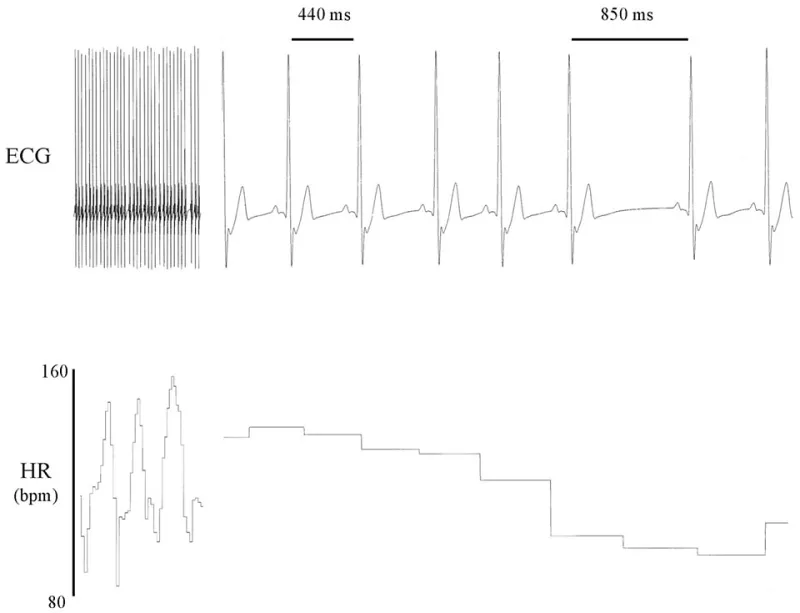
Biofeedback measurements taken during periods of caffeine influence frequently show elevated heart rate, compressed heart rate variability (HRV), heightened skin conductance, and increased muscle tension. These readings, while clinically meaningful, are difficult to interpret accurately when caffeine is a confounding variable. In essence, the stimulant is altering the instrument used to measure the body's baseline.
What Biofeedback Data Reveals About Chronic Caffeine Users
At the Pulsed Biofeedback Clinic, practitioners have observed a consistent pattern among patients who present with complaints of fatigue, anxiety, and difficulty concentrating—many of whom consume three or more caffeinated beverages per day. When initial biofeedback assessments are conducted without requiring patients to abstain from caffeine, the readings often appear deceptively moderate. Stress markers are present but not alarming. HRV scores suggest mild suppression. Muscle tension readings fall within ranges that, on the surface, seem manageable.
However, when follow-up assessments are conducted after a period of caffeine abstinence—typically 48 to 72 hours, sufficient for the stimulant to clear the system—the data shifts markedly. HRV scores frequently drop further, revealing a parasympathetic nervous system that has been struggling to assert itself. Skin conductance levels may rise, reflecting an autonomic stress response that was previously masked. Some patients report feeling considerably worse during this window, not because their health has deteriorated, but because the artificial scaffolding of caffeine has been removed and the body's true state is now visible.
This phenomenon is clinically significant. It suggests that for a meaningful subset of patients, caffeine is not merely a preference—it is functioning as a pharmacological intervention that prevents the nervous system from communicating its distress.
The Adrenal Connection
One of the more concerning patterns observed in habitual caffeine users involves what is sometimes referred to as HPA axis dysregulation—a disruption in the communication between the hypothalamus, pituitary gland, and adrenal glands that governs the body's cortisol response.
Cortisol, the body's primary stress hormone, follows a natural diurnal rhythm: elevated in the morning to support wakefulness and declining through the afternoon and evening to prepare the body for rest. In individuals experiencing chronic stress, this rhythm becomes distorted. Morning cortisol levels may be insufficient, leaving the person feeling genuinely exhausted upon waking—a state that caffeine temporarily resolves by stimulating additional adrenal output.
Over time, this cycle becomes self-reinforcing. The adrenal glands are repeatedly prompted to produce stress hormones through caffeine stimulation rather than through natural physiological cues. The body's own regulatory mechanisms weaken from disuse. And because caffeine provides a reliable external solution each morning, the underlying dysfunction is never identified, let alone addressed.
Biofeedback assessments that measure HRV alongside respiratory patterns and skin temperature can provide indirect evidence of this dysregulation—but only when the data is collected under conditions that reflect the body's true baseline rather than its caffeinated state.
When Patients Finally Tune In Without the Stimulant Mask
The experience of undergoing biofeedback therapy after reducing or eliminating caffeine is, for many patients, genuinely revelatory. Practitioners frequently describe this phase as the moment when the body finally has permission to speak.
Patients who had described themselves as "managing fine" often discover, through objective biofeedback data, that their nervous systems have been operating in a sustained state of low-grade hyperarousal for months or even years. The fatigue they attributed to poor sleep or busy schedules is revealed to have a physiological correlate that caffeine had been suppressing. The anxiety they had normalized as a personality trait shows up measurably in their autonomic readings.
This is not a comfortable revelation. But it is a necessary one. Biofeedback therapy is most effective when it can accurately assess the body's actual regulatory capacity—and then train that capacity toward greater resilience. When caffeine is removed from the equation, practitioners gain access to a far more honest picture of where the nervous system is struggling and, crucially, what kind of training it needs.
Breathing regulation exercises, progressive muscle relaxation guided by real-time feedback, and HRV coherence training have all demonstrated meaningful results in patients who commit to this process with a clearer physiological baseline. The data does not lie. And when patients can finally see what their bodies have been quietly communicating, the motivation to engage with treatment tends to strengthen considerably.
A More Honest Conversation About Energy
None of this is to suggest that caffeine is inherently harmful or that every coffee drinker is concealing a dysregulated nervous system. For many people, moderate caffeine consumption poses no significant clinical concern. The issue is not caffeine itself—it is the role caffeine plays when it becomes the primary mechanism by which a person sustains daily functioning.
The question worth asking is not whether you enjoy your morning coffee, but whether you could function without it. Whether the energy it provides feels like a supplement to your natural vitality or a replacement for it. Whether, without it, your body might be trying to tell you something.
Biofeedback therapy offers a means of answering that question with data rather than speculation. By providing objective, real-time measurements of the body's stress and recovery systems, it transforms vague concerns about fatigue and burnout into actionable physiological information.
The nervous system is always communicating. The question is whether we are willing to listen—and whether we have removed enough of the interference to hear it clearly.