The Recovery Advantage Hidden in Your Heartbeat: What HRV Data Reveals About Who Heals Fastest
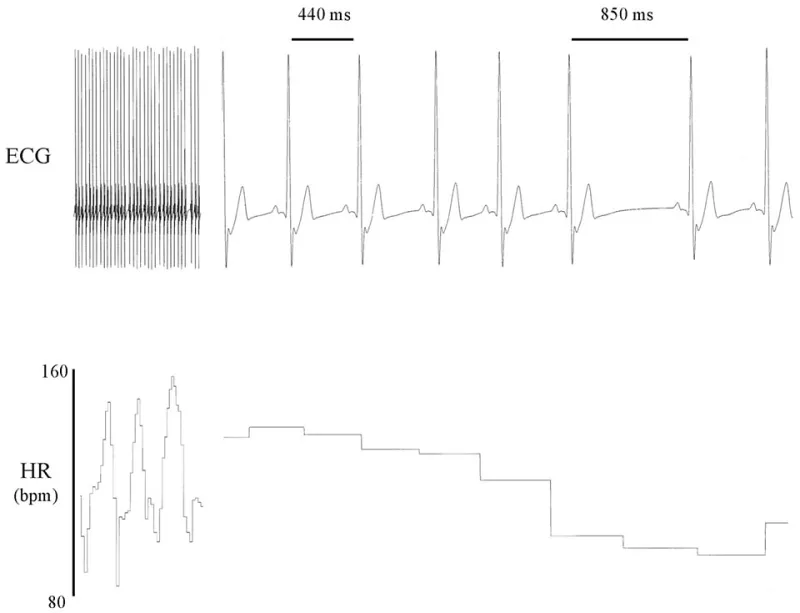
Photo: George Billman, Attribution, via Wikimedia Commons
The Measurement Your Discharge Papers Never Mention
When most Americans leave a hospital after surgery or a serious illness, they receive a stack of instructions: take this medication, avoid that activity, follow up in two weeks. What they rarely receive is any meaningful data about their body's internal readiness to heal. Blood pressure is checked. Temperature is logged. Yet one of the most predictive physiological markers of recovery capacity — heart rate variability, or HRV — is almost never discussed.
That gap is beginning to close, and biofeedback technology is at the center of that shift.
HRV measures the variation in time intervals between consecutive heartbeats. A heart that beats with rigid, metronomic precision is not, as one might assume, a healthier heart. In fact, low variability between beats is increasingly associated with diminished autonomic nervous system function, reduced stress tolerance, and slower recovery from physical trauma. High HRV, by contrast, signals that the autonomic nervous system is flexible, responsive, and capable of marshaling the body's resources efficiently — precisely the qualities needed when the body is under the strain of healing.
What the Science Is Telling Us
The relationship between HRV and recovery is not speculative. A growing body of peer-reviewed research has linked higher pre-operative HRV to shorter hospital stays, lower rates of post-surgical complications, and faster return to baseline function. Studies examining patients recovering from cardiac events, orthopedic procedures, and even intensive cancer treatments have found that those with stronger HRV profiles tend to experience measurably better outcomes.
The mechanism is rooted in the autonomic nervous system's dual branches: the sympathetic, which governs the stress response, and the parasympathetic, which governs rest, repair, and restoration. High HRV reflects a nervous system that can shift fluidly between these two states — ramping up when needed and, crucially, standing down when the threat has passed. During recovery, this regulatory flexibility determines how efficiently the body can redirect energy toward tissue repair, immune response, and cellular restoration.
When HRV is chronically suppressed — often due to unresolved psychological stress, poor sleep, or longstanding pain — the parasympathetic system remains underactive. The body stays in a low-grade defensive posture, and healing is correspondingly slower.
From Abstract Data to Real Decisions
Consider how this plays out in practice. A patient preparing for an elective knee replacement arrives at Pulsed Biofeedback Clinic several weeks before their scheduled procedure. During an initial assessment session, real-time biofeedback monitoring reveals a notably low HRV score — not dangerously so, but significantly below the range associated with robust recovery potential. Further analysis shows elevated sympathetic tone and minimal parasympathetic activation, patterns consistent with chronic workplace stress and disrupted sleep.
Rather than proceeding on the original timeline, the patient and their care team use this data to inform a six-week pre-surgical protocol. Guided HRV biofeedback sessions train the patient to activate their parasympathetic response on demand through controlled breathing and progressive relaxation techniques. By the time of the procedure, their HRV score has improved substantially. Their post-operative recovery, as they later report, proceeds more smoothly than they anticipated — with less reliance on pain medication and an earlier return to physical therapy milestones.
This is not anecdote dressed as evidence. It is the practical application of objective physiological data to a real clinical decision.
Timing Is a Physiological Question, Not Just a Scheduling One
One of the most underappreciated insights that HRV monitoring offers is this: the timing of a medical procedure is not merely a logistical matter. It is a physiological one. Scheduling surgery during a period when a patient's autonomic nervous system is under significant strain — following a major life stressor, during a period of chronic sleep deprivation, or in the midst of an unmanaged anxiety disorder — may meaningfully affect how that patient heals.
Biofeedback assessment gives both patients and clinicians a window into that internal landscape. Rather than relying solely on subjective self-report, which is notoriously unreliable when it comes to stress and nervous system state, HRV data provides an objective baseline. It answers the question: is this body, right now, in a condition to heal optimally?
For patients managing chronic illness, this kind of insight carries particular weight. Someone navigating fibromyalgia, an autoimmune condition, or long-term post-viral symptoms may experience significant day-to-day fluctuation in their physiological reserves. Tracking HRV over time allows them to identify patterns — which days, which seasons, which life circumstances correlate with greater resilience — and to schedule demanding treatments or procedures accordingly.
Building the Capacity to Recover
Perhaps the most empowering dimension of HRV biofeedback is that it is not simply diagnostic. It is trainable. Unlike many physiological markers that remain largely fixed, HRV responds to deliberate intervention. Consistent practice with biofeedback-guided breathing protocols has been shown to raise resting HRV over weeks and months. Improved sleep hygiene, reduction of chronic psychological stressors, and targeted nervous system regulation training all contribute to measurable gains.
At Pulsed Biofeedback Clinic, patients working through post-surgical rehabilitation, cancer recovery, or the lingering effects of serious infection are increasingly incorporating HRV monitoring into their healing protocols. The data serves as both a progress marker and a motivational anchor — offering visible confirmation that the body's recovery capacity is genuinely improving, not merely feeling better on a given day.
For patients accustomed to receiving little more than vague reassurances about their recovery trajectory, this specificity is transformative.
A Metric Worth Requesting
The standard American medical encounter is not designed to measure resilience. It is designed to identify pathology. HRV exists in a different category — it quantifies capacity, not just condition. It asks not only what is wrong, but how well-equipped this body is to make things right.
As biofeedback technology becomes more accessible and the clinical evidence base continues to expand, there is a compelling case for HRV assessment to become a routine part of pre-operative evaluation, chronic illness management, and post-procedure monitoring. Patients who understand their HRV are not simply more informed — they are better positioned to participate meaningfully in their own care.
If you are preparing for a procedure, managing a long recovery, or simply curious about the physiological reserves your body currently holds, HRV biofeedback assessment may offer answers that no standard blood panel can provide. The data is there, encoded in the rhythm of your heartbeat. The question is whether anyone has helped you listen.