Brainwaves, Bedtime, and the Future of Sleep: How Real-Time Neural Monitoring Is Giving Chronic Insomniacs Their Nights Back

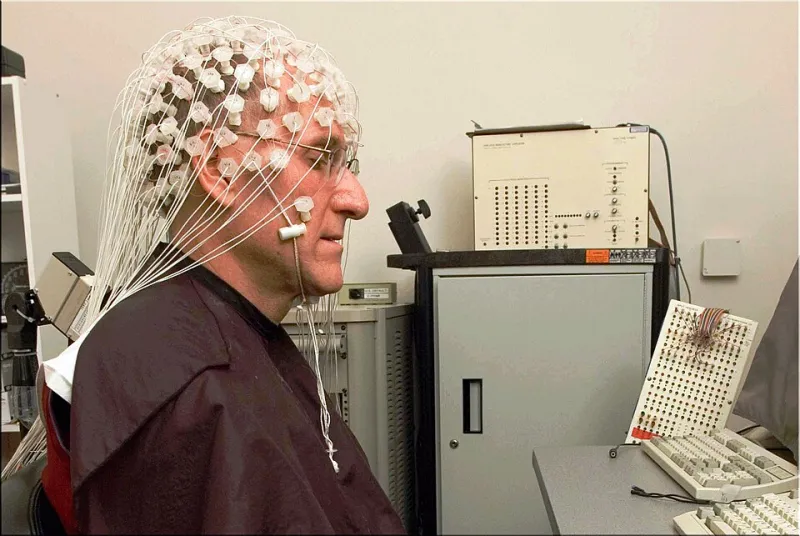
Photo by Photo by Mindfield Biosystems on Unsplash on Unsplash
Approximately 70 million Americans suffer from a chronic sleep disorder, according to the Centers for Disease Control and Prevention. Yet for decades, the clinical conversation around insomnia has centered on a relatively narrow set of solutions: prescription sleep aids, cognitive behavioral therapy, or, for many patients, simply learning to live with exhaustion. A growing body of research and an expanding network of forward-thinking clinics are now challenging that limited menu. At the center of this shift is biofeedback technology capable of reading the brain's own electrical language — and teaching the body to speak it more fluently.
The Architecture of a Night's Rest
To appreciate why brainwave-based biofeedback holds such promise, it helps to understand what a healthy night of sleep actually looks like at the neurological level. Sleep is not a uniform state of unconsciousness. It is a carefully orchestrated sequence of stages, each defined by distinct electrical patterns produced by the brain.
During the lightest stage of non-REM sleep, the brain generates theta waves — slow, rhythmic oscillations that signal the transition from wakefulness. As sleep deepens, delta waves dominate, marking the restorative slow-wave sleep that is critical for physical repair, immune function, and memory consolidation. REM sleep, the stage most associated with vivid dreaming, produces a pattern that paradoxically resembles wakefulness, with faster, lower-amplitude waves enabling emotional processing and cognitive integration.
In a person with chronic insomnia, this architecture is disrupted. The brain may remain locked in higher-frequency beta wave activity — the electrical signature of alert, anxious wakefulness — long after the body has gone to bed. Some patients cycle through lighter stages without ever achieving the deep delta-wave sleep their bodies require. Others wake frequently as their nervous systems fail to maintain the suppression of arousal signals that healthy sleep depends upon.
The problem, in neurological terms, is not simply that the insomniac cannot sleep. It is that their brain has not learned — or has forgotten — how to generate the right frequencies at the right times.
What Biofeedback Adds to the Equation
Conventional polysomnography, the gold-standard sleep study conducted in a clinical lab, has long been capable of recording brainwave activity during sleep. What it cannot do is intervene in real time. A traditional sleep study captures data; it does not teach.
Modern sleep biofeedback systems change this dynamic fundamentally. Using electroencephalography (EEG) sensors placed on the scalp, these devices continuously monitor the brain's electrical output and translate that data into signals the patient can perceive — visual displays, auditory tones, or subtle haptic feedback. When the brain drifts toward the targeted frequency range associated with deeper sleep, the feedback signal reinforces that state. When arousal patterns re-emerge, the system prompts a gentle course correction.
This process, often referred to as neurofeedback when applied specifically to brainwave training, operates on the same foundational principle that governs all biofeedback: the body can learn to regulate processes that were previously considered involuntary, provided it receives accurate, timely information about what those processes are doing.
At Pulsed Biofeedback Clinic, this principle is central to our clinical philosophy. The body is not a passive recipient of treatment. It is an adaptive system capable of remarkable self-correction — when given the tools to listen to itself.
Changing Protocols in Sleep Clinics Across the US
The integration of neurofeedback into sleep medicine is gaining traction at institutions ranging from academic medical centers to specialized outpatient clinics. A 2020 review published in the journal Applied Psychophysiology and Biofeedback examined multiple randomized controlled trials and found that neurofeedback training produced statistically significant improvements in sleep onset latency, total sleep time, and subjective sleep quality among patients with primary insomnia.
Some clinics are now pairing neurofeedback with home-based monitoring devices, allowing patients to continue their training outside a clinical setting. Wearable EEG headbands and sophisticated sensor arrays have made it possible to gather meaningful brainwave data during actual sleep in a patient's own bed — a far more ecologically valid environment than a hospital room with electrodes attached to a wall-mounted monitor.
This shift toward ambulatory neurofeedback represents a significant evolution in how sleep disorders are managed. Rather than observing a single night of disrupted sleep in an unfamiliar environment, clinicians can now track patterns across multiple nights, identify the specific stages where a patient's architecture breaks down, and tailor feedback protocols accordingly.
Patient Experiences: Learning to Sleep Again
The clinical data is compelling, but the human dimension of this work is equally significant. Consider the experience of a patient in her mid-forties — a professional in a high-demand field — who had struggled with sleep-onset insomnia for nearly eight years before beginning neurofeedback therapy. She had tried multiple prescription medications, each producing diminishing returns alongside side effects that complicated her daytime functioning. Melatonin supplements, sleep hygiene education, and even a course of cognitive behavioral therapy for insomnia had provided only modest, temporary relief.
After twelve weeks of neurofeedback sessions targeting theta and slow-wave delta production, she reported falling asleep within twenty minutes for the first time in years. More significantly, she described waking feeling genuinely restored — a qualitative shift that sleep trackers confirmed through improved deep-sleep percentages.
Her experience is not an outlier. Clinicians who have incorporated neurofeedback into their sleep practices frequently describe patients who, after years of pharmaceutical dependency, are able to reduce or eliminate sleep medications under medical supervision — not because they were told to, but because their brains had relearned the rhythms that medications had previously been substituting for.
Addressing the Skeptic's Questions
It is reasonable to approach any emerging therapy with measured scrutiny. Neurofeedback for sleep is not a universal cure, and its effects are not instantaneous. Most clinical protocols require a minimum of twenty to forty sessions before durable changes in sleep architecture are observed. The mechanism by which brainwave training produces lasting neurological change — a process researchers describe as operant conditioning of cortical oscillations — is still being refined in the scientific literature.
Furthermore, not every patient is an ideal candidate. Those whose insomnia is secondary to an underlying medical condition, an unmanaged anxiety disorder, or obstructive sleep apnea will require comprehensive evaluation before neurofeedback is indicated as a primary intervention.
What the evidence does support, with increasing consistency, is that for patients with primary chronic insomnia — particularly those who have not responded adequately to conventional treatments — brainwave biofeedback offers a physiologically grounded, non-pharmacological alternative worthy of serious clinical consideration.
Tuning Into the Brain's Own Frequency
The premise underlying sleep biofeedback is, in a sense, elegantly simple: the brain already knows how to sleep. In many chronic insomniacs, that knowledge has been disrupted by stress, habit, medication, or years of conditioned arousal. Biofeedback does not introduce something foreign into the equation. It holds up a mirror — precise, objective, real-time — and invites the nervous system to find its own way back.
For the millions of Americans who have spent years chasing sleep, that invitation may represent the most significant advance in insomnia treatment in a generation.