Beyond the Smartwatch: Why Heart Rate Variability Is the True Measure of Your Nervous System's Resilience

Photo by Photo by Joshua Chehov on Unsplash on Unsplash
Most Americans who wear a fitness tracker feel a quiet sense of reassurance when their resting heart rate reads somewhere in the sixties. It seems like a clean, simple indicator of cardiovascular health. But cardiologists, neuroscientists, and biofeedback clinicians have long understood that resting heart rate alone is a blunt instrument—useful, but fundamentally incomplete. The metric that more accurately captures your nervous system's true functional state is one that most consumer devices either ignore entirely or display so superficially that users rarely know what to do with it.
That metric is heart rate variability, commonly abbreviated as HRV.
What Heart Rate Variability Actually Measures
At first glance, the concept sounds counterintuitive. Most people assume that a healthy heart beats with metronomic regularity—a steady sixty beats per minute, perfectly spaced one second apart. In reality, a healthy heart does not beat with robotic consistency. The intervals between successive heartbeats fluctuate constantly, contracting and expanding in response to breathing, hormonal signals, cognitive demands, and the ongoing conversation between your sympathetic and parasympathetic nervous systems.
HRV quantifies those fluctuations. A high HRV—meaning the intervals between beats vary considerably—reflects a nervous system that is flexible, adaptive, and capable of toggling efficiently between states of activation and recovery. A low HRV, where the heart beats with little variation, signals that the nervous system is locked into a state of chronic stress or physiological strain, unable to shift gears effectively.
This distinction matters enormously. Chronic low HRV has been associated in peer-reviewed research with increased risk of cardiovascular disease, anxiety disorders, impaired immune function, and reduced cognitive performance. It is not merely a fitness statistic—it is a functional readout of how well your body is managing the cumulative burden of modern life.
Why Consumer Wearables Fall Short
Wearable devices have made HRV data more accessible than ever before, and that is a genuine step forward. However, the way most consumer products present this information creates a significant limitation: they typically offer a single daily score, calculated overnight during sleep, and offer little context for understanding how your HRV responds throughout the day in real time.
This is analogous to checking your blood pressure once every twenty-four hours and assuming the reading captures everything relevant about your cardiovascular health. Stress responses are dynamic. They unfold across minutes and hours, shaped by specific triggers—a difficult conversation, a traffic jam on I-95, a looming work deadline. A single overnight average cannot reveal which situations are quietly eroding your physiological resilience or identify the moments when your nervous system is most vulnerable.
Real-time HRV monitoring through clinical biofeedback equipment provides a fundamentally different level of resolution.
How Biofeedback Brings HRV Into Focus
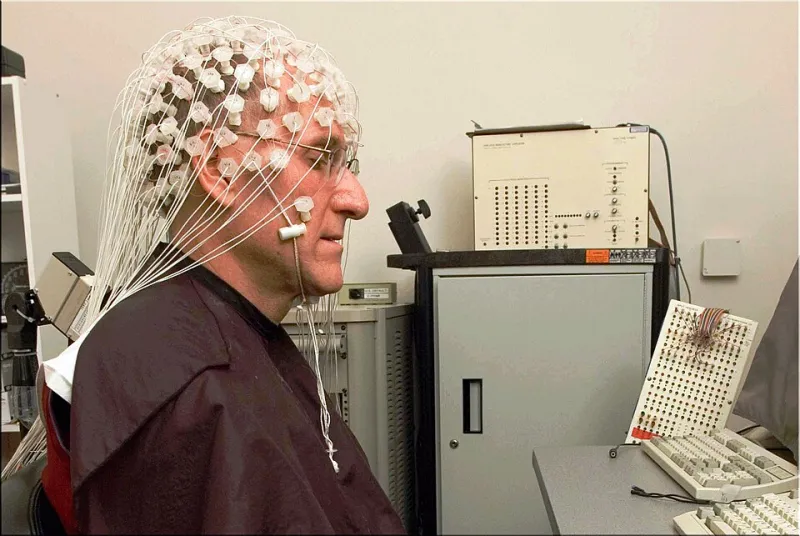
During a biofeedback session at a clinic like Pulsed Biofeedback Clinic, sensors placed at the fingertip or earlobe capture the precise timing of each heartbeat and translate that data into a continuous, visual display. Patients can observe their HRV fluctuating moment to moment as they respond to guided breathing exercises, mental imagery, or simulated stressors introduced by the clinician.
This immediacy is therapeutically powerful. When a patient can see—in real time—how a slow, diaphragmatic breath causes their HRV to climb, or how a tense thought produces an immediate dip in the waveform, the abstract concept of nervous system regulation becomes viscerally concrete. The body's internal landscape is no longer invisible.
Over multiple sessions, patients learn to recognize their personal stress signatures: the specific physiological patterns that precede a migraine, an anxiety spike, or a fatigue crash. This early-warning capacity is one of the most clinically significant advantages biofeedback offers over passive monitoring alone.
The Physiology Behind the Training
Improving HRV through biofeedback is not a matter of willpower or positive thinking. It is a process of recalibrating the autonomic nervous system through consistent, guided practice. The primary mechanism involves strengthening what researchers call the baroreflex—the feedback loop between the cardiovascular system and the brain that governs how fluidly the body transitions between sympathetic activation and parasympathetic recovery.
One of the most well-validated techniques used in HRV biofeedback is resonance frequency breathing, sometimes called coherent breathing. By slowing the breath to approximately five to six cycles per minute—a rate that varies slightly between individuals—patients can synchronize their respiratory rhythm with their heart rate in a way that dramatically amplifies HRV. With practice, this state becomes easier to access voluntarily, even outside the clinic setting.
Research published in journals including Applied Psychophysiology and Biofeedback has documented improvements in HRV among patients with hypertension, post-traumatic stress disorder, irritable bowel syndrome, and chronic fatigue—conditions that share a common thread of dysregulated autonomic function.
Practical Steps for Patients Beginning HRV Training
For individuals who are new to biofeedback and curious about HRV training, the following framework provides a reasonable starting point:
Establish a clinical baseline. Before attempting to improve HRV, it is valuable to understand your current status through a formal biofeedback assessment. A trained clinician can identify your personal resonance frequency and establish objective benchmarks for tracking progress.
Practice consistently, not intensively. HRV biofeedback benefits from frequency rather than duration. Sessions of fifteen to twenty minutes, practiced five or more days per week, tend to produce more durable improvements than infrequent longer sessions.
Monitor contextual triggers. Work with your clinician to identify which daily circumstances most reliably suppress your HRV. This targeted awareness accelerates the process of nervous system retraining.
Integrate lifestyle supports. HRV responds to sleep quality, physical activity, alcohol consumption, and nutritional status. Biofeedback training is most effective when supported by foundational wellness habits.
Tuning In Before the Body Breaks Down
One of the central principles at Pulsed Biofeedback Clinic is that the body communicates its distress long before symptoms become undeniable. HRV is one of the clearest channels through which that communication travels. By learning to read and respond to this signal, patients gain something that no passive wearable can provide: genuine agency over their physiological state.
The goal of HRV biofeedback training is not to optimize a number on a screen. It is to cultivate a nervous system that meets life's demands with flexibility, recovers efficiently from adversity, and sustains health over the long term. That transformation begins not with a device strapped to your wrist, but with the decision to listen more carefully to what your body is already trying to tell you.