Before the Flare-Up Arrives: How Biofeedback Is Uncovering the Emotional Roots of Chronic Inflammation

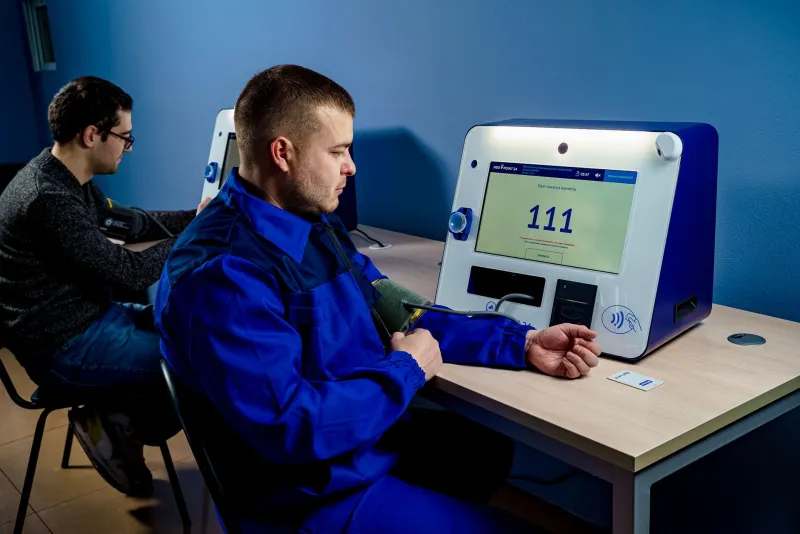
Photo: woman biofeedback therapy session stress inflammation wellness clinic, via feminapt.com
For millions of Americans managing autoimmune conditions, the experience of a flare-up often feels arbitrary — a sudden, unpredictable assault on the body with no apparent warning. Joint swelling arrives overnight. Fatigue descends without cause. The standard medical response, a blood draw, a prescription adjustment, a referral — addresses the aftermath but rarely illuminates what set the fire in the first place.
A growing body of research, however, suggests the body rarely acts without precedent. Long before inflammation registers on a lab panel, the nervous system may already be broadcasting its distress. Biofeedback therapy is emerging as one of the most precise tools available for intercepting those early signals — and for identifying the emotional triggers that conventional diagnostics consistently miss.
The Biology Behind the Emotion-Inflammation Link
The relationship between psychological stress and immune function is no longer a fringe hypothesis. Psychoneuroimmunology — the scientific field dedicated to studying how the brain, nervous system, and immune system communicate — has produced decades of compelling evidence that emotional states directly modulate inflammatory pathways.
When the body perceives a threat, whether physical or psychological, the hypothalamic-pituitary-adrenal (HPA) axis activates, triggering the release of cortisol and pro-inflammatory cytokines. In healthy individuals, this response is temporary. But in those living with chronic stress, unresolved grief, or ongoing emotional dysregulation, the inflammatory cascade can become self-sustaining. For patients with autoimmune conditions such as rheumatoid arthritis, lupus, or chronic fatigue syndrome, this dysregulation may be particularly consequential — the immune system, already prone to misfiring, receives a continuous stream of inflammatory signals that accelerate disease activity.
What makes this cycle so difficult to interrupt is that patients are often unaware it is happening. Emotional tension accumulates silently. The physiological response is invisible to the naked eye. By the time symptoms surface, the underlying process has been underway for some time.
What Biofeedback Detects That Blood Work Cannot
Traditional inflammatory markers — C-reactive protein, erythrocyte sedimentation rate, interleukin-6 — are measured after the fact. A blood draw captures a single moment in a dynamic, constantly shifting biological process. It confirms that inflammation has occurred; it does not reveal when the triggering event began or what emotional context surrounded it.
Real-time biofeedback monitoring operates on an entirely different timeline. By measuring variables such as heart rate variability (HRV), galvanic skin response (GSR), skin temperature, and respiratory patterns, biofeedback devices provide a continuous, moment-to-moment portrait of autonomic nervous system activity. These physiological signals are acutely sensitive to emotional states — often responding within seconds to stressors that the conscious mind has not yet fully registered.
HRV, in particular, has emerged as a powerful proxy for immune system resilience. Research published in peer-reviewed journals has demonstrated that low HRV correlates with elevated inflammatory markers and increased susceptibility to autoimmune flare-ups. When a patient's HRV drops sharply during a biofeedback session — in response to recalling a stressful interaction, for example, or during a specific time of day — that data point becomes clinically meaningful. It suggests that the nervous system is entering a state associated with heightened inflammatory risk.
This is the intelligence that biofeedback surfaces: not a diagnosis, but a pattern. And patterns, unlike isolated lab values, can be acted upon.
Mapping Emotional Triggers in Real Time
One of the most transformative applications of biofeedback for autoimmune patients is the construction of what practitioners sometimes call a personal trigger map. Over the course of multiple sessions, patients and their clinicians begin to identify consistent correlations between specific emotional experiences and measurable physiological disruptions.
A patient with rheumatoid arthritis may discover, for instance, that conversations with a particular family member consistently produce a sustained drop in HRV and an elevation in skin conductance — a pattern that precedes joint inflammation by twenty-four to forty-eight hours. Another patient managing chronic fatigue syndrome might find that anticipatory anxiety around work deadlines creates a respiratory signature associated with sympathetic nervous system dominance, a state that appears to deplete their already-limited energy reserves.
These observations are not anecdotal in the pejorative sense. When captured through calibrated sensors and reviewed alongside a longitudinal symptom diary, they constitute a form of personalized physiological data that is, in many respects, more actionable than population-level clinical guidelines. The patient is no longer waiting for the flare-up to arrive. They are watching its precursors develop in real time and have the tools to intervene.
Learning to Respond Rather Than React
The therapeutic value of biofeedback extends beyond detection. Once patients can see how their nervous system responds to emotional stimuli, they can begin training it to respond differently.
Biofeedback-guided techniques — slow diaphragmatic breathing, progressive muscle relaxation, coherent heart rate training — have been shown to shift autonomic balance from sympathetic dominance toward parasympathetic activation. This shift has measurable downstream effects on inflammatory biology. Research suggests that consistent parasympathetic activation suppresses pro-inflammatory cytokine production and supports regulatory T-cell function, both of which are relevant to autoimmune disease management.
For patients who have spent years feeling powerless in the face of unpredictable symptoms, this shift in agency can be profound. The body, long experienced as an adversary, begins to reveal itself as a system capable of learning — and of healing, when given the right conditions.
A Complementary Framework, Not a Replacement
It is important to be clear about what biofeedback therapy is and what it is not. It does not replace rheumatology, immunology, or any form of evidence-based medical care. Patients managing autoimmune conditions should continue working closely with their physicians, adhering to prescribed treatment protocols, and monitoring clinical markers through appropriate diagnostic channels.
What biofeedback offers is a complementary layer of self-knowledge — one that conventional medicine, constrained by appointment schedules and laboratory turnaround times, is structurally unable to provide. It fills the space between clinic visits with continuous, meaningful data. It empowers patients to notice what their bodies are communicating before that communication escalates into a crisis.
In a healthcare landscape where autoimmune conditions are rising steadily among American adults, and where the limitations of purely pharmaceutical approaches are becoming increasingly apparent, that kind of empowerment is not a luxury. It is a clinical necessity.
Tuning In Before the Storm
The body is rarely silent before a flare-up. It speaks in the language of heart rate variability, in the subtle shift of skin temperature, in the rhythm of breath. For too long, that language has gone unheard — not because patients were inattentive, but because they lacked the instruments to listen.
Biofeedback therapy provides those instruments. It translates the body's continuous physiological broadcast into information that is visible, interpretable, and actionable. For patients living at the intersection of chronic inflammation and emotional complexity, that translation may represent the most meaningful advance in their care that no prescription can offer.