Feeling Calm Versus Being Calm: Why Wellness Apps Fall Short of True Nervous System Change
The wellness app market in the United States is worth billions of dollars and growing. Platforms like Calm, Headspace, and dozens of competitors have made guided meditation accessible to virtually anyone with a smartphone. Their promise is straightforward: follow along, breathe deeply, and feel better. For many users, that promise feels delivered. The session ends, the shoulders drop, the mind quiets—at least momentarily.
But what if that sense of relief, however genuine it feels, is not accompanied by any measurable change in how your nervous system actually functions? What if the app is doing something closer to covering a warning light than fixing the engine beneath it?
This is not a criticism of mindfulness as a practice. Decades of research affirm that meditation, breath work, and intentional relaxation carry real benefits. The more precise question is this: without objective, real-time physiological data, how do you know whether your practice is producing lasting neurological change—or simply offering a pleasant interlude in an otherwise dysregulated day?
The Difference Between Guided Relaxation and Clinical Biofeedback
Guided relaxation—whether delivered by an app, a recorded audio track, or a live instructor—operates through suggestion and pacing. You are invited to slow your breath, soften your gaze, and release tension from specific muscle groups. These cues are valuable. They direct conscious attention toward the body in ways that most modern Americans rarely experience.
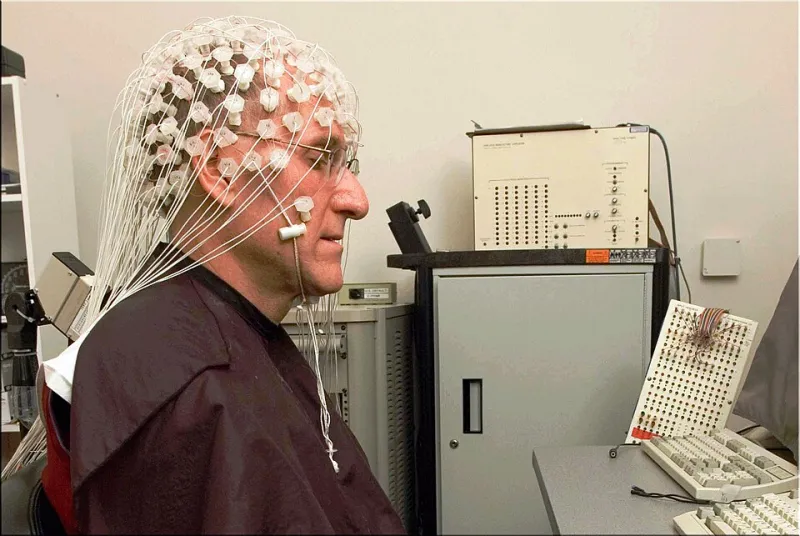
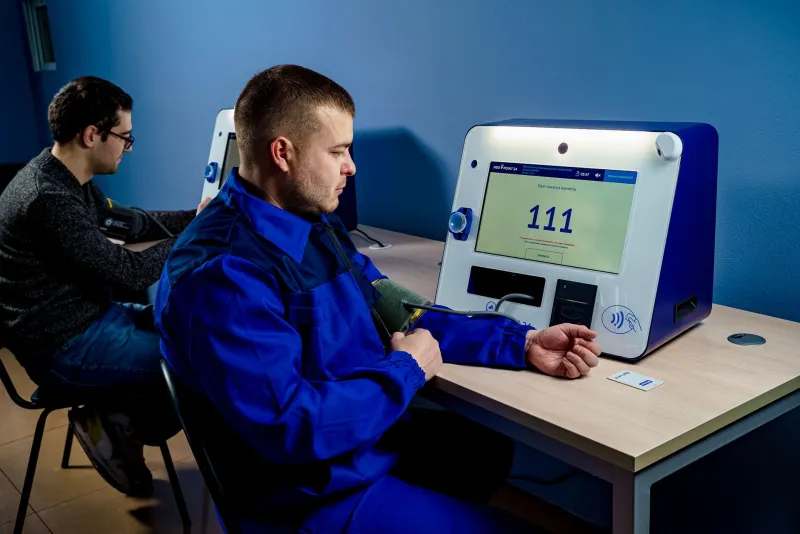
Clinical biofeedback, by contrast, operates on an entirely different principle. Rather than guiding you toward a feeling, it measures what your body is actually doing in real time and presents that information back to you in a form you can act upon. Sensors placed on the skin track metrics such as heart rate variability, skin conductance, muscle tension, respiratory rate, and brainwave activity. The data stream is continuous, precise, and honest in a way that subjective sensation simply cannot be.
The distinction matters because the nervous system is not always transparent to conscious awareness. A person can sit quietly, breathe slowly, and report feeling relaxed while their heart rate variability remains low, their sympathetic nervous system continues firing at an elevated baseline, and their muscle tension stays well above a healthy resting threshold. The feeling of calm and the physiology of calm are related—but they are not the same thing.
Why the Body Can Fool the Mind
Chronic stress has a particularly insidious quality: it normalizes. When the nervous system has been operating in a state of low-grade activation for months or years—as is common among adults managing demanding careers, caregiving responsibilities, financial pressure, or unresolved trauma—the elevated baseline begins to feel like the default. What was once recognizable as tension becomes simply the way things are.
This is precisely why self-report is an unreliable instrument for measuring nervous system health. People who have lived with chronic dysregulation for long periods often describe themselves as calm during clinical assessments, even as their physiological data suggests otherwise. They are not being dishonest. They have simply recalibrated their internal reference point.
A meditation app has no mechanism for detecting this. It accepts your self-report at face value, plays the next session, and marks another day completed in your streak. Clinical biofeedback, by contrast, reveals the gap between perception and physiology—and more importantly, it gives you the tools to close it.
What Real-Time Data Actually Teaches the Nervous System
The therapeutic power of biofeedback lies in a concept called operant conditioning applied to involuntary physiological processes. When a patient can see a live readout of their heart rate variability or observe a visual representation of their brainwave activity, they gain access to feedback that the conscious mind does not ordinarily receive. Over repeated sessions, the brain learns to associate specific internal states with specific outcomes on the display, and it begins to reproduce those states more reliably.
This is not passive relaxation. It is active, data-driven training. The nervous system is being taught, through direct and immediate feedback, what regulation actually feels like at the biological level—not the conceptual level.
Consider the analogy of physical therapy following a knee injury. A therapist does not simply tell a patient to walk normally and trust that the instruction will produce correct gait mechanics. They observe, measure, and provide corrective feedback at every step. Biofeedback applies the same principle to the autonomic nervous system. The body needs information to change, and subjective experience alone does not supply enough of it.
The App Industry's Honest Limitation
It would be unfair to suggest that wellness apps are without value. For individuals who have never engaged in any form of mindfulness practice, they represent an accessible entry point. They reduce barriers to breath awareness and present-moment attention in ways that can be genuinely helpful as a starting position.
The limitation is not one of intent but of architecture. An app cannot measure your galvanic skin response. It cannot detect the subtle variability in your cardiac rhythm that indicates how efficiently your vagus nerve is functioning. It cannot tell you whether the five-minute breathing exercise you just completed shifted your autonomic balance in a meaningful direction or left it essentially unchanged.
Without that data, wellness becomes a matter of faith rather than evidence. You continue the practice because it feels good, or because the reminder notification appears each morning, or because the streak counter provides a sense of progress. None of these are reliable proxies for physiological change.
What to Look for in a Data-Driven Approach
For individuals who are serious about nervous system health—particularly those managing chronic stress, anxiety, pain conditions, or the aftermath of prolonged emotional strain—a clinically supervised biofeedback program offers something no app currently can: verifiable progress.
In a structured biofeedback program, baseline measurements are established at the outset. Each session generates data that can be compared against prior sessions. Trends become visible. Plateaus can be identified and addressed. The patient is not guessing whether they are improving; the record shows it.
At Pulsed Biofeedback Clinic, this data-driven philosophy underpins every aspect of care. Practitioners work with patients to interpret physiological signals, design individualized training protocols, and track outcomes over time. The goal is not to produce a pleasant hour in a reclining chair. It is to produce measurable, durable change in how the nervous system responds to the demands of daily life.
Moving Beyond the Feeling
There is nothing wrong with wanting to feel calm. That desire is entirely reasonable, and the relief that comes from a well-designed meditation session is real in its own right. But for those who have noticed that the calm evaporates quickly, that stress returns at the same intensity, or that no amount of app-guided breathing seems to shift their baseline, the explanation may be straightforward: they are training the feeling without training the physiology.
Real transformation in nervous system function requires real information. It requires a system capable of listening to the body with precision and translating that signal into something the brain can learn from. That is what clinical biofeedback provides—and it is a capability that, for all their polish and convenience, wellness apps are not yet designed to offer.