The Quiet Storm Before the Migraine: How Biofeedback Is Catching Warning Signals Hours Before the Pain Begins
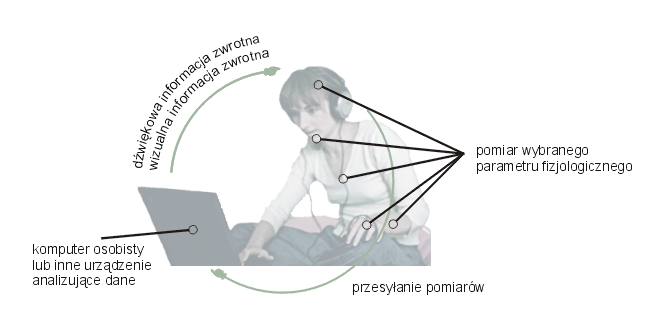
Photo: Unknown, CC BY-SA 3.0, via Wikimedia Commons
For the approximately 39 million Americans who live with migraines, the experience is often described as something that simply happens to them. One moment life is proceeding normally; the next, a debilitating wave of pain, nausea, and sensitivity has rendered them unable to work, parent, or function. The prevailing assumption—both culturally and, until recently, clinically—is that migraines arrive without meaningful notice.
The body, however, disagrees.
Decades of neurological research have established that migraines unfold in distinct phases, the earliest of which—known as the prodrome—can begin anywhere from two to 72 hours before pain onset. What has remained frustratingly elusive is the ability to measure that prodrome in real time, in a way that is clinically actionable. Traditional symptom diaries ask patients to record what they consciously notice: fatigue, mood changes, food cravings. But the most diagnostically significant shifts occur below the threshold of conscious awareness, written in the language of the autonomic nervous system.
This is precisely where biofeedback enters the conversation.
What the Body Knows Before You Do
The autonomic nervous system governs a vast array of physiological processes—heart rate, blood vessel dilation, sweat gland activity, muscle tone—that operate largely outside voluntary control. In migraine sufferers, this system exhibits measurable dysregulation well before pain begins. The challenge has always been capturing that dysregulation at the right moment.
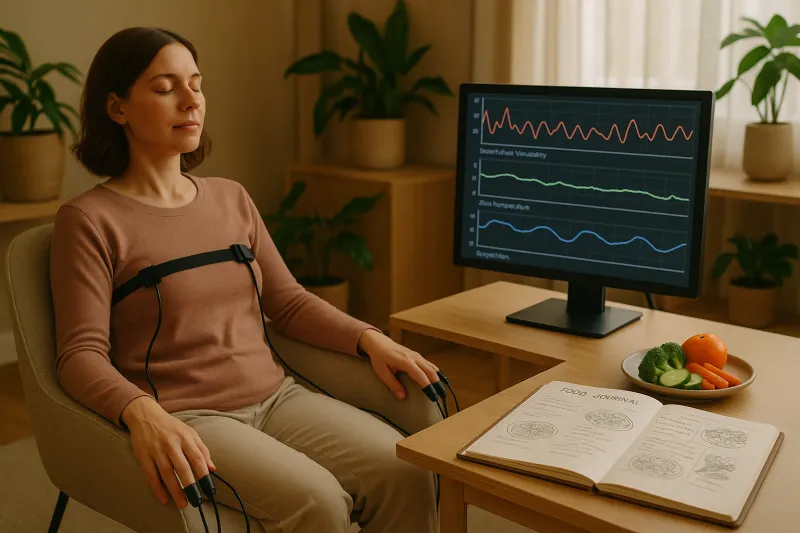
Biofeedback sensors, when applied in a clinical setting, can monitor several key biomarkers simultaneously. Among the most informative are peripheral skin temperature, surface electromyography (sEMG) readings from the trapezius and temporalis muscles, galvanic skin response, and heart rate variability (HRV). Each of these metrics carries a distinct signal in the hours preceding a migraine episode.
Skin temperature, for instance, tends to drop in the extremities as blood vessels constrict—a hallmark of sympathetic nervous system activation that frequently precedes migraine onset. HRV, which measures the variation in time between heartbeats and serves as a reliable index of autonomic balance, often shifts toward low-frequency dominance in the prodromal window, indicating a nervous system tilting toward a stress-primed state. Muscle tension in the neck and jaw, meanwhile, may begin climbing subtly long before a patient reports any awareness of tightness.
Individually, none of these changes would prompt alarm. Collectively, they compose a physiological signature—a quiet storm gathering force beneath the surface.
Why Symptom Diaries Fall Short
The standard clinical recommendation for migraine management has long included keeping a detailed symptom diary. Patients are encouraged to log their sleep, diet, stress levels, hormonal cycles, and environmental exposures in an effort to identify personal triggers. This approach has genuine value, but it carries an inherent limitation: it relies entirely on self-reported, consciously perceived experience.
Consider the nature of early autonomic shifts. A drop in fingertip temperature of one or two degrees Celsius is not something most people would notice while preparing breakfast or sitting in a meeting. A modest reduction in HRV is invisible without instrumentation. Subtle increases in trapezius muscle tone rarely register as discomfort until they have progressed substantially.
By the time a migraine sufferer writes in their diary that they felt "a little off" that morning, the physiological cascade may already be well underway. Traditional tracking captures the shadow of the storm, not the storm itself.
Biofeedback, by contrast, captures the data directly—objectively, continuously, and without depending on the patient's subjective interpretation of their own internal state.
The Intervention Window: Acting Before Pain Arrives
The clinical significance of early biomarker detection lies not merely in prediction but in the possibility of prevention. When patients understand that their body has entered a prodromal pattern—evidenced by specific, measurable physiological changes—they gain access to an intervention window that symptom-based approaches simply cannot provide.
At Pulsed Biofeedback Clinic, patients working through migraine management protocols are trained to recognize their individual biomarker thresholds. Through repeated biofeedback sessions, they learn to associate specific sensor readings with their own prodromal signatures. Over time, this creates a form of body literacy that extends beyond the clinic walls.
More importantly, they are equipped with targeted self-regulation techniques to deploy during that early window. Thermal biofeedback training—in which patients practice raising peripheral skin temperature through directed relaxation—has been studied since the 1970s and remains one of the more robust non-pharmacological interventions for vascular headache prevention. Diaphragmatic breathing protocols designed to shift HRV toward parasympathetic dominance can interrupt the autonomic cascade before it reaches a critical threshold. Progressive muscle relaxation targeting the cervical and cranial musculature addresses the tension component directly.
None of these interventions are new in isolation. What biofeedback provides is the timing intelligence to deploy them effectively—before the cascade becomes irreversible.
Personalization: The Variable That Changes Everything
One reason migraine management has historically proven so resistant to standardization is the profound individual variability in how migraines manifest. Two patients with identical diagnoses may have entirely different prodromal signatures, different trigger hierarchies, and different responses to the same interventions.
This is not a limitation of biofeedback; it is, in fact, where the technology excels. Because biofeedback generates objective, patient-specific data over multiple sessions, it naturally produces individualized profiles rather than population-level averages. The biomarker pattern that predicts a migraine for one patient may be irrelevant for another. What matters is identifying your pattern—the particular constellation of physiological signals that your nervous system reliably produces in the hours before your pain begins.
This level of personalization is difficult to achieve through any other means. Pharmacological prevention protocols are typically adjusted based on frequency and severity outcomes measured over weeks or months. Biofeedback data can begin revealing individual patterns within the first several sessions.
Rethinking the Patient's Role in Migraine Care
Perhaps the most significant shift that biofeedback-informed migraine care introduces is a reconceptualization of the patient's role. In the conventional medical model, migraine management is something that is largely done to the patient—medications are prescribed, triggers are avoided, rescue therapies are administered when prevention fails. The patient is, in a meaningful sense, a recipient of care.
Biofeedback therapy repositions the patient as an active participant in their own nervous system regulation. When you can see in real time that your trapezius tension is rising, that your HRV is narrowing, that your skin temperature is beginning to fall—and when you have been trained to respond to those signals with effective countermeasures—you are no longer waiting for the storm to break. You are learning to read the sky.
For patients who have spent years feeling ambushed by their own neurology, this shift is not a small thing. It represents a restoration of agency in a condition that has often stripped it away entirely.
The migraine precursor has always been there. For the first time, we have the tools to listen to it.