When 'Normal' Blood Work Isn't the Whole Story: How Biofeedback Is Giving Women Objective Evidence for Hormonal Symptoms

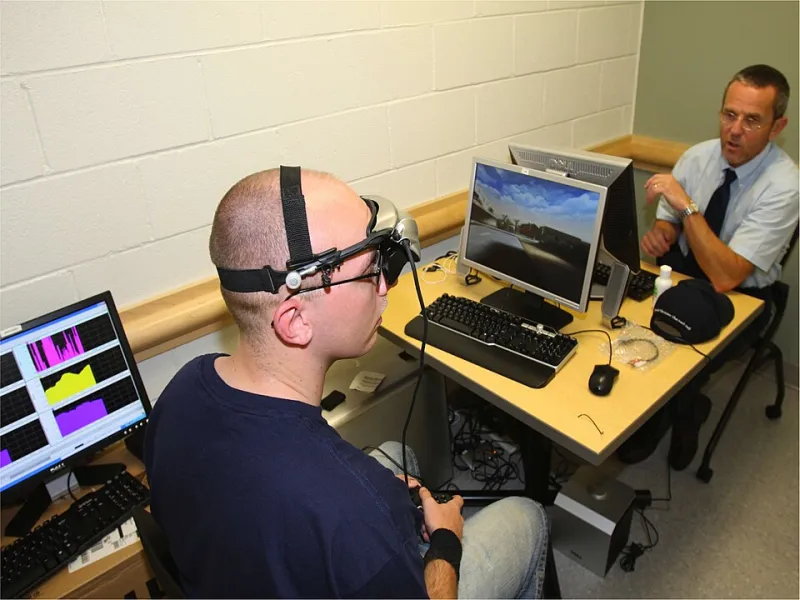
Photo: Bill Branson (Photographer), Public domain, via Wikimedia Commons
For many American women, the experience follows a familiar and frustrating arc. The fatigue arrives like clockwork. The mood shifts feel seismic. The physical discomfort is real enough to disrupt work, relationships, and daily functioning. Yet when the lab results return, a physician glances at the numbers and delivers the same verdict: everything looks normal.
Normal. It is a word that has functioned, for decades, as a kind of clinical dismissal—one that disproportionately affects women seeking answers about cyclical, hormonal, or reproductive health concerns. The problem is not always that something is being overlooked on the blood panel. The problem is that blood panels, however thorough, capture a single moment in a system defined by constant change.
Biofeedback technology is beginning to fill that gap in a way that conventional diagnostics have struggled to address.
The Limitation of a Snapshot in a System Built on Rhythm
The female endocrine system is not static. Hormonal concentrations shift across a monthly cycle, across seasons, and across decades of a woman's life. Estrogen, progesterone, cortisol, and a cascade of related compounds fluctuate not merely from week to week but from hour to hour. A standard blood draw represents one data point within a dynamic, continuously moving system.
This is not a criticism of laboratory medicine—it is simply an acknowledgment of its structural limitation when applied to cyclical physiology. A serum estradiol level drawn on day ten of a cycle tells a clinician relatively little about how a patient's autonomic nervous system responded to the hormonal drop that occurred five days prior, or how her body will regulate stress responses in the days approaching menstruation.
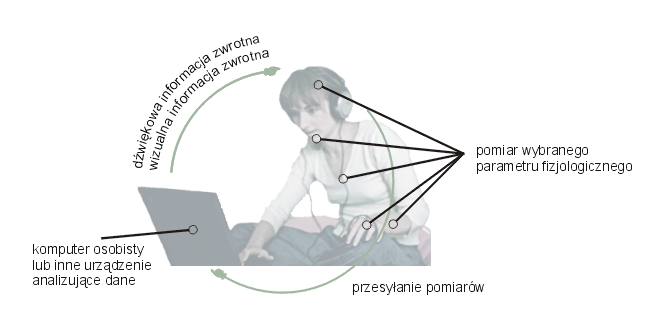
Biofeedback, by contrast, measures the body in real time and across repeated sessions. It does not capture a single hormonal value. It captures the physiological consequences of hormonal activity—the downstream effects that manifest in heart rate variability, skin conductance, respiratory rate, and muscle tension patterns.
What the Data Actually Reveals
At Pulsed Biofeedback Clinic, practitioners work with patients to establish individualized physiological baselines and then track how those baselines shift across the menstrual cycle. What this longitudinal data frequently reveals is striking.
Heart rate variability—widely regarded as one of the most sensitive indicators of autonomic nervous system health—tends to fluctuate meaningfully across hormonal phases. Many women demonstrate measurably reduced HRV in the luteal phase, the period between ovulation and menstruation, which corresponds precisely to the window in which premenstrual symptoms are most commonly reported. This reduction is not imagined. It is quantifiable, reproducible, and visible in the biofeedback record.
Skin conductance, which reflects the activity of the sympathetic nervous system through sweat gland response, similarly shows phase-dependent variation in many patients. Elevated skin conductance levels—indicative of heightened physiological stress—often appear days before a woman consciously registers that she is approaching a symptomatic period. The body, in other words, is signaling distress before the patient has consciously identified it.
Respiratory patterns tell their own story. Shallow, irregular breathing—a hallmark of dysregulated nervous system activity—appears with greater frequency in certain hormonal windows, particularly among women who report anxiety, sleep disruption, or cognitive fog tied to their cycles.
Why Women's Symptoms Are Dismissed—and Why That Must Change
The systemic underdiagnosis of women's hormonal symptoms is well-documented in medical literature. Studies have consistently found that women wait longer for diagnoses, receive less aggressive treatment for pain, and are more frequently told their symptoms have a psychological rather than physiological origin. Conditions such as premenstrual dysphoric disorder, perimenopause, endometriosis, and polycystic ovary syndrome are routinely underdiagnosed or misattributed for years.
Part of this problem is cultural. Part of it is a historical research gap—women were systematically excluded from clinical trials for much of the twentieth century, leaving medicine with an incomplete picture of female physiology. And part of it is simply the limitation of diagnostic tools that were not designed with cyclical variation in mind.
Biofeedback does not solve these systemic issues on its own. However, it does something clinically significant: it produces objective, timestamped physiological data that a patient can bring to any appointment. When a woman can demonstrate, through weeks of recorded measurements, that her autonomic nervous system consistently enters a state of measurable dysregulation at a predictable point in her cycle, that data changes the nature of the clinical conversation. It transforms a subjective complaint into an observable pattern.
Identifying Treatment Windows Through Cyclical Monitoring
Beyond validation, biofeedback offers something more actionable: the identification of personalized intervention points. Not every woman's cycle follows the same pattern, and not every woman experiences hormonal sensitivity in the same physiological domain. Biofeedback monitoring allows practitioners to identify precisely when a given patient's nervous system becomes most vulnerable and to tailor therapeutic interventions accordingly.
For some women, this means scheduling more intensive biofeedback training sessions during the luteal phase, when autonomic regulation is most challenged. For others, it means using HRV-guided breathing protocols to build resilience before the most symptomatic window arrives—essentially training the nervous system in the weeks when it is strongest so that it is better equipped when stress loads increase.
This approach reflects a broader principle at the core of biofeedback therapy: the body has a remarkable capacity for self-regulation when given accurate, real-time information about its own state. The menstrual cycle does not have to be a monthly crisis. With sufficient data and targeted training, many women find that their physiological responses to hormonal fluctuation become progressively less severe over time.
Moving Toward a More Complete Picture of Women's Health
The women who seek care at clinics like ours often arrive having already traveled a long diagnostic road. They have had blood drawn, hormones measured, and symptoms minimized. What they frequently have not had is a sustained, longitudinal look at how their nervous systems actually behave across the arc of their hormonal lives.
Biofeedback does not replace endocrinology, gynecology, or any other branch of conventional medicine. It complements those disciplines by adding a continuous, patient-centered physiological record that static laboratory values cannot provide. In doing so, it offers women something that has been in short supply for far too long: data that confirms what their bodies have been communicating all along.
For women who have been told, repeatedly, that everything looks normal—the question worth asking is whether the tools being used to reach that conclusion are actually designed to see the full picture. In many cases, they are not. And in that gap between what conventional testing measures and what the living body experiences, biofeedback is finding its most important clinical ground.