When 'I'm Fine' Is a Lie Your Body Keeps Telling: What Biofeedback Uncovers About Hidden Nervous System Dysregulation
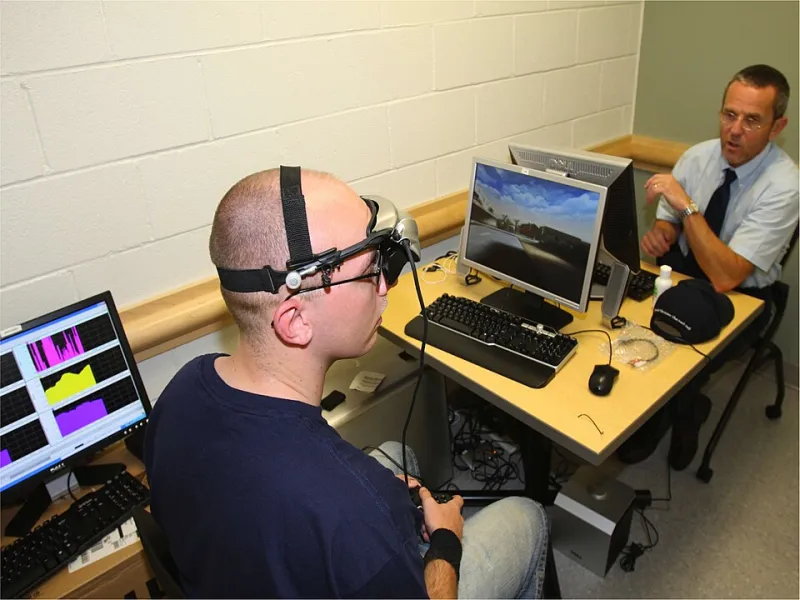
Photo: Army Medicine, CC BY 2.0, via Wikimedia Commons
The Gap Between How You Feel and What Your Body Is Actually Doing
There is a particular kind of patient who arrives at a biofeedback clinic with a frustrating story. They have seen their primary care physician. They have completed a course of talk therapy. Their bloodwork is unremarkable, their sleep schedule is technically adequate, and when asked how they are feeling, they answer — honestly, without deflection — that they feel fine. And yet something is profoundly wrong.
They are tired in a way that rest does not resolve. Their digestion is unpredictable. Their muscles carry a low, persistent tension they have stopped noticing the way one stops noticing the hum of a refrigerator. They are functional. They are coping. But they are not well.
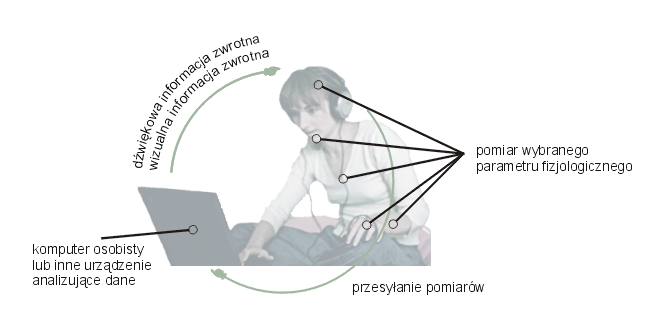
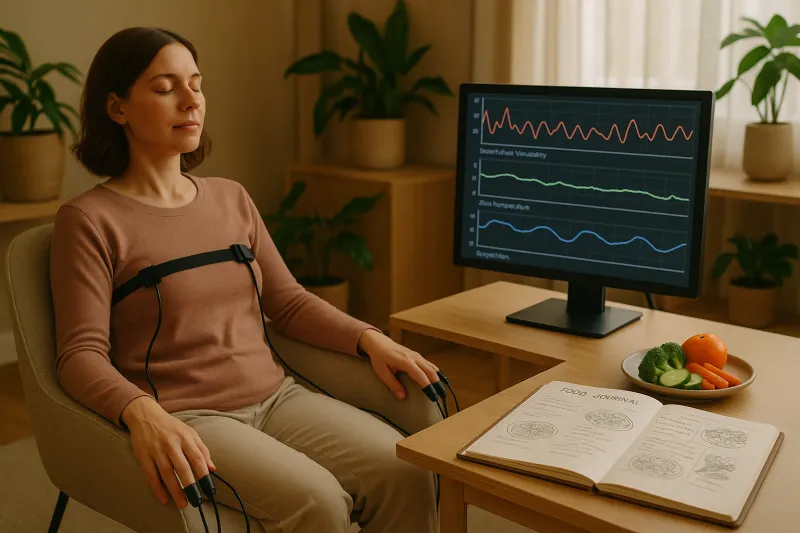
When biofeedback sensors are applied — measuring skin conductance, heart rate variability, muscle tension, and peripheral skin temperature — the data that emerges tells a story the patient's conscious mind has never been able to access. Their nervous system is not fine. It is, in physiological terms, running hot: locked in a sustained pattern of sympathetic activation that the body has learned to normalize so thoroughly that no conscious alarm signal remains.
This is what clinicians in the biofeedback field sometimes call the frozen nervous system — not frozen in the sense of being dormant, but frozen in a fixed state of high-alert readiness, unable to cycle naturally into the restorative parasympathetic mode that genuine recovery requires.
Why the Mind Stops Registering What the Body Cannot Stop Doing
To understand how this disconnect develops, it helps to appreciate the nervous system's extraordinary capacity for adaptation. When a person lives through prolonged stress — whether that stress arises from a demanding career, a difficult relationship, financial strain, or a history of adverse experiences — the autonomic nervous system recalibrates. What was once an acute threat response becomes a chronic baseline.
Over time, the body stops flagging this elevated state as unusual. Cortisol levels that would have felt alarming in an earlier season of life come to feel ordinary. The elevated resting heart rate, the shallow breathing pattern, the perpetually braced musculature — these become the new normal. The individual is no longer consciously aware of being stressed because, neurologically speaking, they have adapted to stress as their default condition.
This is precisely where traditional talk therapy encounters a structural limitation. Cognitive and verbal interventions are extraordinarily effective at reshaping conscious thought patterns. They can help a person reframe their narrative, identify distorted beliefs, and develop healthier coping strategies. What they cannot reliably do is reach into the subcortical, largely nonverbal territory where autonomic regulation actually occurs. A patient can leave a therapy session with genuine insight and authentic feelings of relief while their heart rate variability data continues to reflect a nervous system that has not received the message.
What Real-Time Physiological Data Reveals That Self-Report Cannot
This is the clinical contribution that biofeedback offers — not as a replacement for other therapeutic modalities, but as a window into physiological territory that remains invisible to introspection.
When a patient's skin conductance readings remain persistently elevated throughout a session in which they report feeling calm and comfortable, that data point is not a contradiction to dismiss. It is information. It suggests that the body is maintaining a level of arousal that the conscious mind has learned to screen out, and that meaningful therapeutic work remains to be done at the level of the nervous system itself.
Heart rate variability, in particular, has emerged as one of the most sensitive and revealing markers of this hidden dysregulation. A healthy nervous system breathes rhythmically between sympathetic and parasympathetic influence, producing a characteristic variability in the interval between heartbeats. A nervous system locked in chronic fight-or-flight activation loses this variability. The heart beats with a mechanical regularity that looks, on a surface level, like steadiness but is actually a sign of reduced adaptability and resilience.
Patients who see this data displayed in real time frequently describe a moment of recognition that no verbal description of their condition had previously produced. The graph does not argue with them or ask them to examine their childhood. It simply shows them, objectively and without judgment, what their body has been doing without their awareness.
The Clinical Process of Thawing a Dysregulated System
Identifying the problem is the first step. The more consequential work involves helping the nervous system learn — gradually and through repeated practice — that it is safe to release its vigilance.
Biofeedback-guided interventions for chronic sympathetic activation typically involve a combination of approaches tailored to the individual's specific physiological signature. Diaphragmatic breathing training, guided by real-time respiratory and heart rate variability feedback, teaches the body to activate the vagal pathways that initiate parasympathetic recovery. Neurofeedback protocols can address the cortical patterns associated with hyperarousal states. Surface electromyography biofeedback helps patients identify and consciously release the chronic muscular bracing that has become invisible to them through years of habituation.
The process is not rapid, and it is not passive. Patients are active participants in their own physiological re-education. The feedback loop — seeing the data shift in response to their own intentional practice — is itself a therapeutic mechanism, demonstrating to a skeptical nervous system that change is possible and that lower arousal states are not threats to be resisted.
Many patients report that progress feels counterintuitive at first. As sympathetic activation begins to decrease, they may briefly experience heightened awareness of sensations they had been suppressing. This is often a sign that the system is beginning to thaw — that the body is cautiously allowing itself to feel what it had been too defended to register.
Why This Matters for Conditions That Seem Unrelated to Stress
The clinical relevance of undetected nervous system dysregulation extends well beyond fatigue and anxiety. Chronic sympathetic activation has documented associations with inflammatory processes, digestive dysfunction, cardiovascular strain, immune suppression, and disrupted sleep architecture. Patients who present with any of these conditions and who describe themselves as emotionally stable are not necessarily being inaccurate — they may simply be reporting their conscious experience faithfully while an entirely different story unfolds beneath the threshold of awareness.
For these individuals, treatments that address only the downstream symptom — the irritable bowel, the recurring headaches, the persistent insomnia — without investigating the autonomic environment in which those symptoms are occurring may provide limited and temporary relief.
Biofeedback offers a different starting point: not the symptom, but the system.
Listening to the Signal Beneath the Silence
At Pulsed Biofeedback Clinic, we work regularly with patients who have spent years being told, or telling themselves, that they are fine. The data frequently suggests otherwise — not because these patients are wrong about their subjective experience, but because the nervous system operates largely beyond the reach of subjective experience.
The body keeps its own record. Biofeedback technology allows us to read it.
If you recognize yourself in the description of someone who functions adequately but never fully recovers, who feels emotionally stable but physically depleted, who has tried conventional approaches without lasting resolution, the answer may not be that nothing is wrong. The answer may be that what is wrong has simply never been measured in the right way.
Your nervous system has a story to tell. The question is whether you have access to the tools that can help you hear it.