Normal Results, Real Suffering: How Biofeedback Detects What Standard Medical Tests Leave Behind

Photo: Mennonite Church USA Archives, No restrictions, via Wikimedia Commons
There is a particular kind of frustration reserved for the patient who sits across from a physician, describes months of debilitating fatigue, chest tightness, or inexplicable pain, and is told—with the best of intentions—that every test came back normal. The bloodwork is unremarkable. The imaging is clean. Clinically speaking, nothing appears to be wrong.
And yet the suffering is undeniable.
This experience is far more common in the United States than most people realize. Researchers estimate that a significant portion of primary care visits involve symptoms that resist straightforward diagnosis—conditions that exist in the space between what standard medicine can measure and what the human body is actually doing. For these patients, biofeedback technology is emerging as a profoundly meaningful tool, one capable of revealing physiological patterns that a routine office visit simply was not designed to capture.
The Limits of the Snapshot
Conventional medical diagnostics are, by their nature, momentary. A blood draw captures a single point in time. An electrocardiogram records a few minutes of cardiac activity under controlled, clinical conditions. Even a thorough physical examination reflects the body as it presents during one specific encounter—often in an environment that is itself physiologically unusual. Waiting rooms, white coats, and unfamiliar surroundings can suppress or mask the very symptoms a patient is trying to communicate.
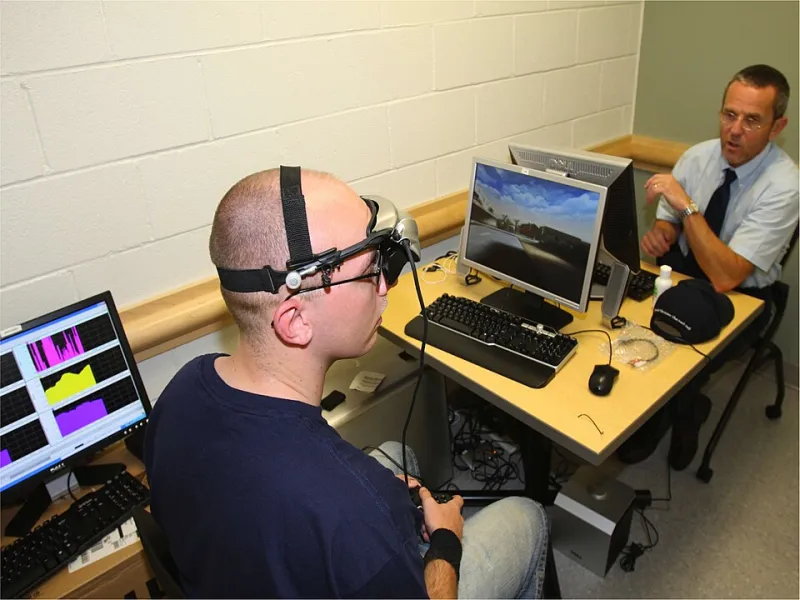
Biofeedback operates differently. Rather than capturing a single frame, it records a continuous stream of real-time physiological data—heart rate variability, skin conductance, muscle tension, respiration patterns, peripheral temperature, and brainwave activity—across extended periods and varied conditions. This temporal dimension is not a minor distinction. It is, in many cases, the entire difference between detecting a problem and missing it entirely.
Consider autonomic dysregulation, a dysfunction of the involuntary nervous system that governs heart rate, digestion, blood pressure, and dozens of other essential processes. Patients with this condition may appear entirely stable during a resting clinical assessment. It is only when the nervous system is observed responding to ordinary stressors—a brief cognitive task, a change in posture, a moment of mild anxiety—that the dysregulation becomes visible. Biofeedback sensors can detect these subtle misfires in real time, mapping the gap between how the nervous system should respond and how it actually does.
When the Body Speaks in Frequencies
One of the most clinically significant metrics that biofeedback captures is heart rate variability, or HRV. This measurement reflects the subtle fluctuations in time between consecutive heartbeats—a nuanced signal that communicates the state of the autonomic nervous system with remarkable precision. Low HRV is associated with chronic stress, cardiovascular risk, impaired immune function, and a reduced capacity to recover from both physical and emotional strain.
The important detail is this: a patient can have a perfectly normal resting heart rate and still exhibit profoundly suppressed HRV. Standard diagnostics would flag nothing unusual. Biofeedback, however, would surface a pattern that warrants attention—a nervous system under sustained strain that has not yet produced the kind of acute, measurable event that conventional medicine is equipped to identify.
Similarly, skin conductance sensors can detect fluctuations in the electrodermal activity that accompanies emotional arousal and stress responses. Muscle tension sensors can identify chronic, low-grade contraction in specific muscle groups that a patient may not consciously perceive but that nonetheless contributes to pain, fatigue, and postural dysfunction. These are not abstract signals. They are measurable, reproducible physiological realities—ones that simply fall outside the scope of a standard clinical panel.
The Hormonal and Inflammatory Dimension
For many patients—particularly those navigating conditions such as fibromyalgia, chronic fatigue syndrome, or persistent post-viral symptoms—the frustration is compounded by the knowledge that something hormonal or inflammatory seems to be driving their experience, even when laboratory markers fall within accepted reference ranges.
Biofeedback cannot replace endocrinological testing, nor does it claim to. However, by tracking the physiological correlates of hormonal and inflammatory activity—cortisol-linked stress responses, autonomic patterns associated with systemic inflammation, respiratory irregularities tied to immune dysregulation—it can identify functional signatures that suggest where deeper investigation may be warranted. In this way, biofeedback serves not only as a therapeutic modality but as a sophisticated triage instrument, helping clinicians and patients alike understand which physiological systems may be operating outside their optimal parameters.
This is particularly significant given the emerging research on conditions such as dysautonomia and mast cell activation syndrome, both of which can produce wide-ranging, severe symptoms while routinely evading detection through conventional diagnostics. The patients who carry these diagnoses often describe years of being told their results were normal—years during which the underlying dysfunction continued to compound.
From Detection to Direction
Identifying a physiological pattern is meaningful only insofar as it points toward a course of action. This is where biofeedback's therapeutic dimension becomes essential. The same technology that reveals dysregulation can also train the body to correct it.
Through guided biofeedback sessions, patients learn to consciously influence the physiological processes that were previously operating below awareness. Slow, paced breathing exercises can measurably improve HRV over time. Progressive muscle relaxation protocols, guided by real-time tension feedback, can interrupt chronic contraction patterns. Neurofeedback training can shift brainwave activity toward states associated with calm alertness and restorative sleep.
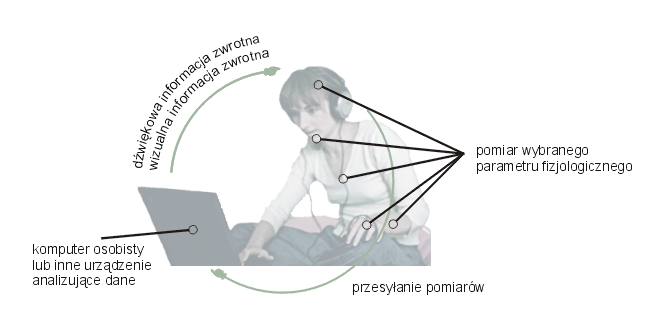
Critically, the feedback loop itself is the mechanism of change. Patients do not simply receive information about their bodies—they learn to respond to it, building new regulatory habits that gradually become automatic. For individuals whose symptoms have resisted explanation and treatment for months or years, this process can represent a fundamental reorientation in their relationship with their own physiology.
Filling the Gap That Medicine Leaves Open
None of this is intended to diminish the value of conventional medical care. Standard diagnostics serve an essential function, and biofeedback is most powerful when it operates as a complement to, rather than a replacement for, evidence-based medicine. The goal is not to circumvent the healthcare system but to extend its reach into territory it currently cannot access.
For the patient who has been told, repeatedly and sincerely, that their results are normal—while their body continues to insist otherwise—biofeedback offers something that may feel almost radical in its simplicity: a way of being heard. Not by a physician interpreting a data point, but by a system that listens to the body continuously, attentively, and without the constraints of a fifteen-minute appointment.
At Pulsed Biofeedback Clinic, we believe that unexplained symptoms are rarely inexplicable. More often, they are simply unmeasured. The technology now exists to change that—and for many patients, that change represents the beginning of a path they had nearly given up on finding.